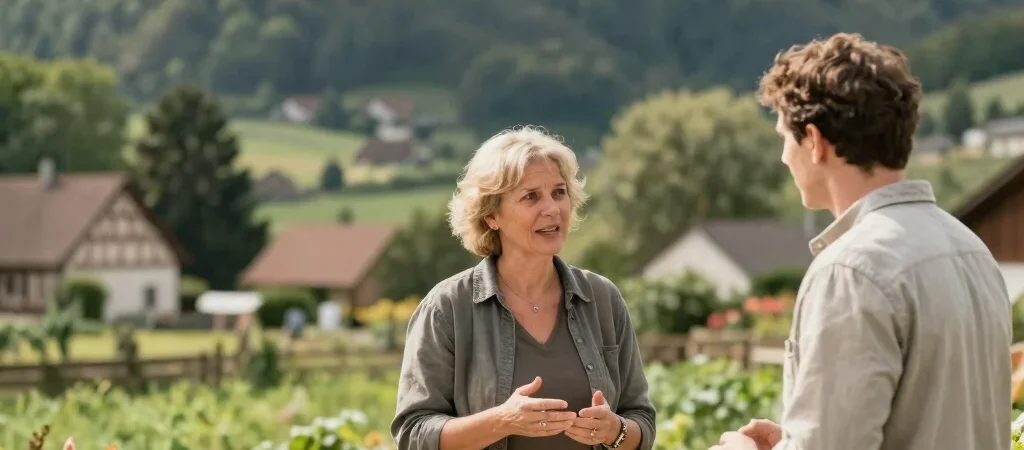
At a farm shop or market stall, “local” can sound like a complete answer. It is really the start of a more useful conversation: where was this grown or made, and how did it reach you? Around Schirmeck and the Bruche Valley, those details matter because a guide should describe individual producers accurately, not turn the whole region into one story.
Ask about the journey
Start with the ingredient’s origin, rather than relying on where it is being sold. For a prepared product, ask which parts are made locally and which ingredients come from elsewhere; “made here” and “grown here” are not always the same claim. A clear answer gives you something more useful than a broad label.
It can also help to ask whether the person selling the food produced it, transformed it, or sourced it from another farm. Short supply chains can bring producers and customers closer, but they do not all take the same form. Keep those distinctions in mind when comparing products or reading a local-food listing.
Read claims with care
Origin, farming method, and seasonality are separate details, so one does not automatically prove the others. If a label or answer is unclear, note exactly what is confirmed and what remains unknown. That is a fairer way to understand a farm product than filling gaps with assumptions.
For a local guide, useful information is specific: a named place of production, a described process, or a clearly stated ingredient origin. Availability, opening times, and sales arrangements can change, so check them directly before making a trip. The best question is a simple one: what can you tell me about this particular product?